Design Strategy of Staffing Supply Chain Transformation for People-Centric Enterprise
Faced with an outdated tech ecosystem and fragmented processes, the organization’s staffing model was slow, opaque, and frustrating for all involved. Bringing a human-centered design lens to this transformation was critical—not just to match the right people with the right roles at the right time and cost, but to support meaningful career development and business agility.
I led the end-to-end experience design strategy, from discovery and research through service design and strategic roadmap development. Through mixed-methods research and collaborative synthesis, we uncovered key friction points and future-state opportunities. I delivered a comprehensive transformation proposal including a prioritized opportunity framework and a vision for the end-state staffing experience.
In parallel, I quickly earned trust across executive and program teams, advocating for an HCD approach and building design capabilities within the team. This work helped reframe staffing from an operational function to a critical enabler of people-centered growth and strategic workforce agility.
Challenge
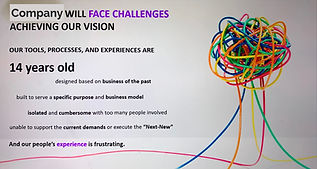
In a business where people are the product, staffing is mission-critical. Yet, the experience of being staffed—especially for highly skilled professionals—was filled with friction, confusion, and a lack of transparency. The organization faced
- Unmet business needs to staff people with the right skills and experience at the right time, location and cost to deliver for our clients
- Low trust in staffing processes worsened by inconsistent communication and unmet expectations
- Lack of confidence to grow a career and stressful transitions between staffing assignments
These pain points were not just operational—they impacted retention, morale, and productivity—and ultimately, business success. With the rapidly rising need for agility in the global business environment, this is more critical than ever to achieve and sustain business success.

Approach
- Delivered experience design and strategy proposal to executive stakeholders
- Built relationships with previously resistant leaders—gaining trust and commitment to invest
- Shifted the narrative around staffing from operations to employee experience
- Created a foundation for long-term improvements in transparency and fit
Impact
- Delivered experience design and strategy proposal to executive stakeholders
- Built relationships with previously resistant leaders—gaining trust and commitment to invest
- Shifted the narrative around staffing from operations to employee experience
- Created a foundation for long-term improvements in transparency and fit
Not pictured: Service Design, Personas, detailed tech requirements, other artifacts
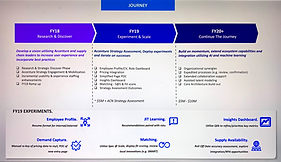
Future-State Journey & Profile Drafts


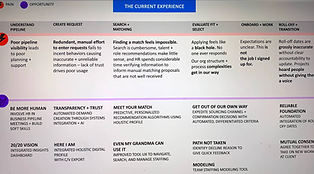
Prioritized Pain Points & Opportunities Along Experience
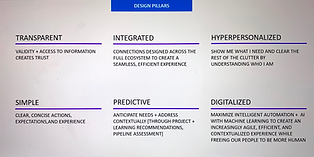
Design Pillars / Principles
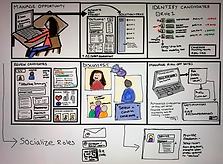
Sample of Strategy Artifact Drafts


Design Approach & Responsibilities
Discover & Define
- Led research design and project management sourcing participants, customizing methods, creating and facilitating in person and virtual workshops
- Synthesized and distilled insights to inform
- current state experience with pain points and opportunities
- future state service design
- design pillars to inform characteristics of the experience
Ideate
- Designed and led ideation sessions for concept co-creation
- tech features and requirements across multiple systems and necessary integration points
- prioritized roadmap and journey timeline
- Iterated future state service design
Prototype & Test
- create sketch prototypes for rapid testing and iteration with people
- bringing the proposed requirements to life and contextualized within the experience
- efficient conversations with tech teams on feasibility
Deliver
- Delivered service design and strategy proposal to executive stakeholders
- Detailed draft of initial tech requirements and KPI framework to measure success
- Created a foundation for long-term improvements in transparency and fit
Along the way
- Developed human-centered design capability within cross-functional program team
- Built relationships with previously resistant leaders—gaining trust and commitment to invest
Design Artifact Excerpts
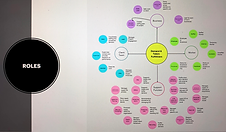
Complexity - Roles in scope

Designed and facilitated virtual and in-person workshops

Workshop in Mural
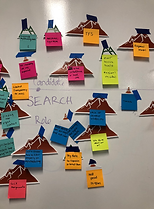
Mountain vs Molehill


Breakup Letter
Adaptable Research Methods for insight gathering
Posters & handouts for break time at corporate learning center - broad reach of diverse participants quickly
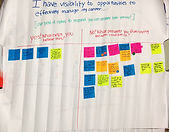
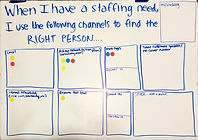
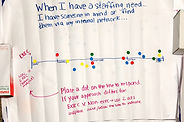
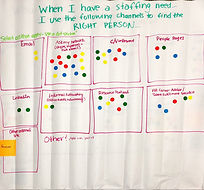


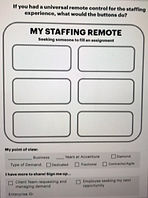

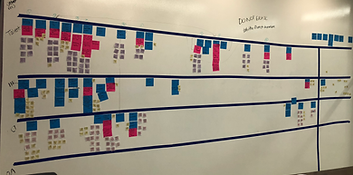
Synthesis - In person and Virtual

Sketches
Sketch style intentional to encourage input and iteration where polished graphics can cause hesitation.
These helped achieve:
- bringing the proposed requirements to life and contextualized within the experience
- efficient conversations with tech teams on feasibility
- rapid testing and iteration with people responding to these "paper prototypes"
- shared understanding and buy-in from stakeholders
Storyboard resonated with stakeholders
Sketch wireframes demonstrated tech features to address uncovered needs.